


Do you own a Buy-to-Let (BTL) property and are considering selling it? One tax you’ll need to be aware of is Capital Gains Tax. If you sell something for more than what you paid for it, you could be liable for capital gains tax. In simple terms, that’s how capital gains tax works, but of course, there’s far more to it than that.
In this article, we'll explore the various aspects of capital gains tax for Buy-to-Let properties in the 2024-25 tax year, including how to calculate it, applicable reliefs, and other essential considerations.
What is Capital Gains Tax (CGT)?
Capital Gains Tax (CGT) is a tax levied on the profit you make when selling an asset, such as a Buy-to-Let property. The "gain" refers to the difference between the property's sale and original purchase prices minus any allowable deductions.
For Buy-to-Let properties, CGT becomes payable once the property is sold, and a profit (capital gain) has been realised. It's important to note that CGT is only due to the gain, not the total sale price.
Capital Gains Tax Rates for Buy-to-Let Properties in 2024-25
The rates of CGT for Buy-to-Let properties differ depending on your tax bracket. If you sell a Buy-to-Let property in the 2024-25 tax year, you'll face the following CGT rates:
- Basic-rate taxpayers (those earning up to £50,270): You will pay 18% on any capital gains.
- Higher-rate and additional-rate taxpayers (those earning more than £50,270): You will pay 28% on any capital gains.
To determine your CGT rate, you need to consider your total income from all sources, including employment, pensions, and other investments. Once you calculate the total gain from the sale of the property, that gain is added to your annual income to assess which CGT rate applies to you.
Capital Gains Tax Allowance in 2024-25
The annual CGT allowance is an important element in reducing your tax bill. The allowance for the 2024-25 tax year is £3,000, which has been reduced from the previous year's allowance of £6,000.

For Example,
If your total gain from selling a Buy-to-Let property is £25,000, your taxable gain would be £22,000 (£25,000 minus the £3,000 CGT allowance). This taxable gain is then subject to the appropriate CGT rate based on your income bracket.
For couples who jointly own a property, both individuals are entitled to the CGT allowance, meaning they can collectively offset £6,000 against their capital gains.
Relief on Capital Gains Tax
While the capital gains tax on Buy-to-Let properties can be a substantial figure, there are several reliefs and deductions available to reduce the taxable gain:
By deducting these expenses, you reduce the overall capital gain and, thus, the amount of tax you owe.
- Estate agency fees
- Solicitor’s Fees
- Stamp duty from the original purchase
- Improvement costs (not maintenance), such as adding an extension or converting a loft, but only if they were made while you owned the property.
Private Residence Relief (PRR)
Private Residence Relief (PRR) applies to individuals who have lived in the property as their main residence at some point during the time they owned it. If you used the property as your primary home before letting it out, you might be entitled to PRR for the period during which you lived there. The more time you spend living on the property, the larger the relief.
Additionally, the final nine months of ownership are automatically treated as if you lived in the property, even if it was rented out during that time.
For Example,
You bought a property for £200,000, lived in it for 5 years, then rented it out for 5 years, and sold it for £300,000, making a gain of £100,000. Since you lived in the property for 5 years and get relief for the final 9 months of ownership, 5.75 years out of the 10 years qualify for Private Residence Relief (PRR). This means 57.5% of the £100,000 gain is exempt, leaving £42,500 subject to Capital Gains Tax.
How to Calculate Capital Gains Tax on a Buy-to-Let Property
Calculating CGT on a Buy-to-Let property can seem complex, but here’s a simplified step-by-step guide:
- Determine the sale price: You sold the property for this amount.
- Deduct the purchase price: Subtract the price you originally paid for the property from the sale price to calculate the basic gain.
- Deduct allowable expenses: Subtract any allowable expenses (like legal fees, stamp duty, or improvement costs) from the basic gain.
- Apply Private Residence Relief (if applicable): If you lived in the property at any point, apply PRR to reduce your gain for the time it was your main residence.
- Subtract your CGT allowance: Deduct the CGT annual allowance (£3,000 for 2024-25).
- Calculate the taxable gain: You're left with the taxable gain after subtracting all allowable deductions and reliefs.
- Apply the CGT rate: Apply the appropriate CGT rate (18% or 28%) based on your income bracket and whether you are a basic-rate or higher-rate taxpayer.
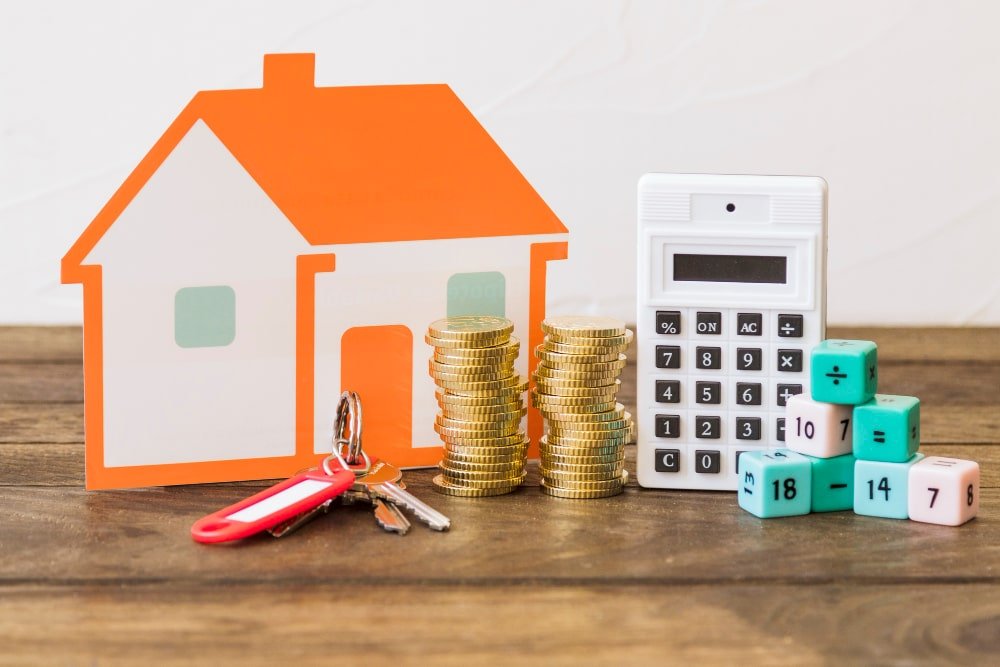
For Example,
Imagine you bought a Buy-to-Let property for £200,000 and sold it ten years later for £300,000, with £10,000 spent on allowable expenses (e.g. legal fees and renovations). Here’s a rough breakdown:
- Sale price: £300,000
- Purchase price: £200,000
- Allowable expenses: £10,000
- Basic gain: £300,000 - £200,000 - £10,000 = £90,000
- Private Residence Relief (PRR): You lived in the property for 2 years and get relief for the final 9 months, so 2.75 years of PRR.
- PRR applies to 2.75 out of 10 years, or 27.5% of the gain.
- PRR exempt gain: 27.5% of £90,000 = £24,750.
The remaining taxable gain is:
£90,000 - £24,750 = £65,250.
Now, you apply for the £3,000 CGT allowance:
£65,250 - £3,000 = £62,250 taxable gain.
You would then apply the relevant CGT rate (18% for basic-rate taxpayers, 28% for higher-rate taxpayers) on £59,250.
Payment Deadlines and Reporting Capital Gains
If you make a capital gain from selling a Buy-to-Let property, you need to report and pay the tax to HMRC. The rules around this have changed recently:
Late Filing (60‑day CGT return)
How Late | Penalty |
|---|---|
Missed Filing deadline | £100 fixed penalty |
3 months late | £10 per day (up to 90 days — up to £900) |
6 months late | Another £300 OR 5% of the tax due, whichever is greater |
12 months late | 5% or £300 if greater*, unless the taxpayer is held to be deliberately withholding information that would enable HMRC to assess the tax due. |
12 months & taxpayer deliberately withholds information | Penalty is based on behaviour:
Reductions apply for prompted and unprompted disclosures. HMRC will consider 'telling, giving access and helping' when determining any reduction. |
Late Payment of CGT
How Late | Penalty |
|---|---|
30 days after due date | 5% of unpaid tax |
6 months after due date | 5% of unpaid tax (additional) |
12 months after due date | 5% of unpaid tax (additional) |
Interest on Late Payments
HMRC charges interest on any unpaid CGT from the day after the 60‑day reporting deadline until the tax is paid in full.
Conclusion
Capital Gains Tax (CGT) on Buy-to-Let properties can be a significant cost, but understanding the rules, rates, and reliefs can help reduce your tax liability. Proper planning is essential when selling a rental property to ensure you take advantage of all available allowances and deductions, such as Private Residence Relief (PRR) and the CGT annual allowance.
If you're unsure about the tax implications of selling your property or want to ensure you're maximising relief, it's wise to seek expert advice. We can help guide you through the process, offering personalised advice on minimising your CGT liability.
Need expert advice on Capital Gains Tax on Buy-to-Let Properties?
Contact us today for efficient and hassle-free assistance.
Frequently Asked Questions
Yes, but only in certain situations. Buy-to-let properties may be eligible for Private Residence Relief if they have been the individual’s main residence at some point. The relief mainly applies to property that is, or has been, your main home. If you rented out the property after living in it, you may still be eligible for partial relief depending on how long it was your main residence.
CGT only applies to chargeable assets. Some assets, such as cars, chattels under £6,000, wasting chattels, sterling cash, ISAs, and foreign currency, are excluded from CGT. These assets are not subject to CGT when disposed of.
When spouses or civil partners living together transfer assets, there’s no Capital Gains Tax (CGT) because it’s treated as “no gain, no loss.” If they separate, this rule lasts for up to three years after they stop living together. If the transfer is part of a divorce or court order, there’s no time limit. The CGT is delayed until the recipient sells the asset, and they use the original cost of the transferring partner.
Non-UK residents who sell UK property must report the disposal and pay Capital Gains Tax (CGT) by submitting an NRCGT return within 60 days of completion. While similar to UK residents' requirements, calculating CGT for non-residents can be more complex due to different rules on costs, timing, and reliefs.

- Could the Autumn Budget 2026 Bring Down the UK Mansion Tax Threshold to £1.5m? - 25 September 2026
- The Bank of England Interest Rate Stays at 3.75%. But Here’s the Catch - 18 September 2026
- The North Is Now the Fastest UK Rent Growth Region. Here’s What That Does to Rental Yields - 17 September 2026
