

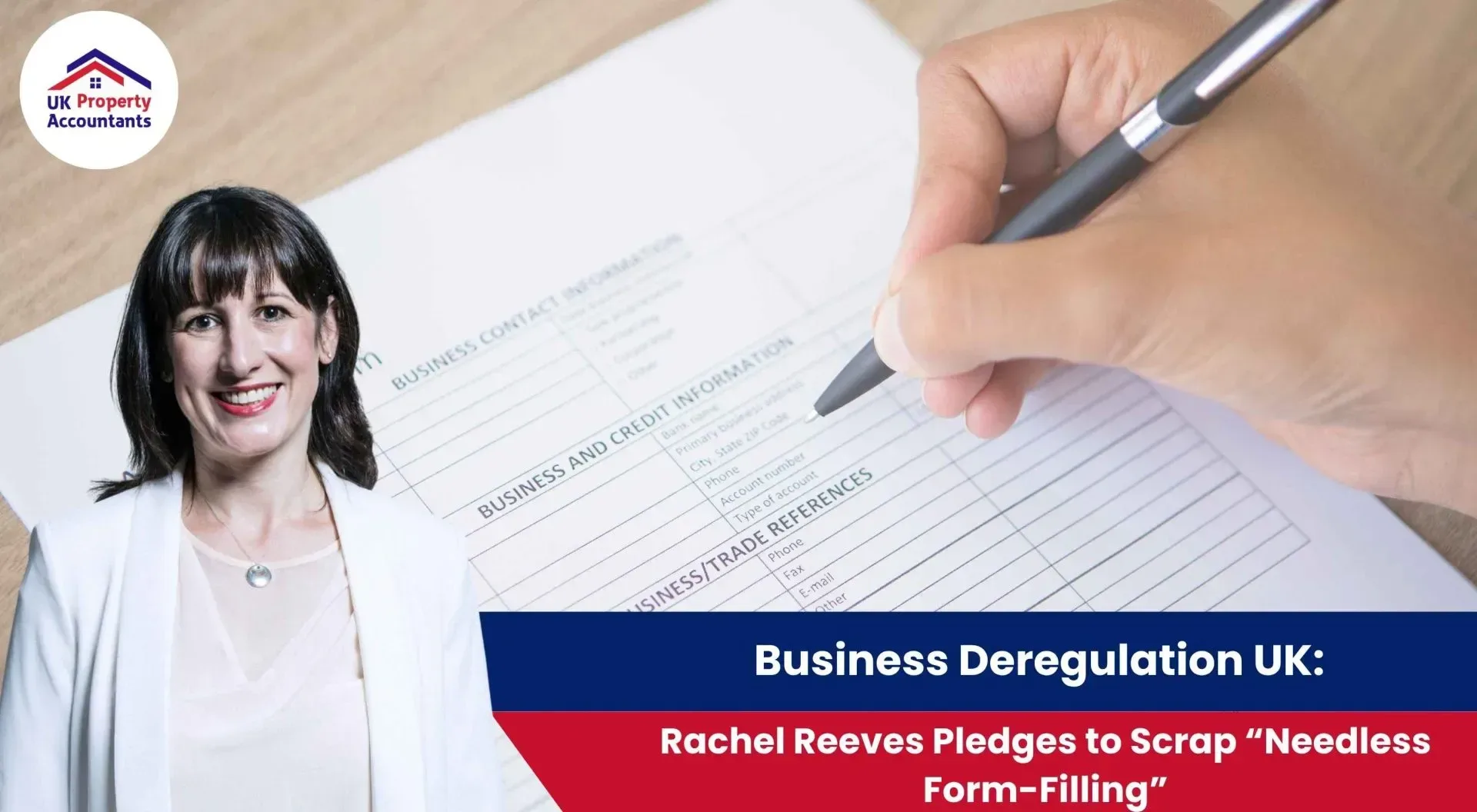
Business Deregulation UK: Rachel Reeves Pledges to Scrap “Needless Form-Filling”
Rachel Reeves pledges major business deregulation in the UK, cutting Companies House reporting and bureaucracy to save SMEs £6bn a year.

Chancellor Rachel Reeves has announced plans for significant business deregulation in the UK, aiming to reduce bureaucracy and cut “needless form-filling” for companies of all sizes.
Speaking at a regional investment summit in Birmingham, Reeves stated that these reforms would make the UK a more attractive destination for global capital while easing administrative burdens on firms.
The government estimates that the proposed changes could save UK businesses nearly £6 billion a year by the end of the parliamentary term.
Simplifying Companies House Reporting for SMEs
A cornerstone of the reforms is the simplification of Companies House reporting. Small businesses, including family-run cafés and enterprises, will no longer be required to submit lengthy reports that often consume time and resources unnecessarily.
Business Secretary Peter Kyle stated that unnecessary reporting requirements for directors are being eliminated to reduce administrative burdens and encourage SME growth in the UK. By streamlining reporting procedures, small firms can focus more on core business activities rather than paperwork.
The Government’s Pro-Business & Pro-Worker Approach
The government has emphasised that its reforms are both pro-business and pro-worker. Measures include temporary exemptions for certain new AI technologies to allow companies to innovate and commercialise products quickly without the immediate constraints of regulation.
Kyle explained, “In certain circumstances, when new AI technology is being developed, we can remove it from all regulation for a period of time to give the space to really grow.”
This targeted approach aims to support innovation while ensuring benefits for society, including in health, education and economic development.
Business Deregulation UK’s Aim: Reducing Bureaucracy & Administrative Costs
The government has pledged to reduce the administrative cost of regulation by 25% by the end of this Parliament. Reeves noted that for too many businesses, the economy is “not working as it should” and cutting red tape is essential to making the UK more business-friendly.
Industry voices have welcomed the proposals. However, small business advocates cautioned that the true test would be in the upcoming Autumn Budget, warning that new taxes or compliance requirements could offset the benefits of deregulation.
Political Perspectives on This Business Deregulation
Opposition parties have also commented on the proposed reforms. Liberal Democrats’ Treasury spokeswoman Daisy Cooper argued that truly cutting bureaucracy requires addressing the billions of extra pieces of business paperwork generated by Brexit, potentially through some UK-EU arrangement.
Despite these criticisms, Reeves’ reforms signal a clear intention to streamline business operations in the UK, reduce compliance costs and encourage SME growth in the UK.
What This Means for UK Businesses
For SMEs and small businesses, the proposed changes offer:
- Simplified Companies House Reporting - Less paperwork and fewer time-consuming reports.
- Potential Savings of £6 Billion Annually - Resources freed for growth and innovation.
- Support for Innovation - Temporary regulatory exemptions for emerging AI technologies.
- Balanced Employment Policies - Ensures fair treatment of both workers and employers.
The reforms have the potential to transform the regulatory environment, but experts emphasise that their success will depend on complementary fiscal policies announced in the forthcoming Budget.
Conclusion
Rachel Reeves’ pledge to reduce red tape represents a major step toward business deregulation, particularly benefiting SMEs and family-run enterprises. By simplifying Companies House reporting, supporting innovation and cutting administrative costs, the government is signalling a more business-friendly approach.
However, the true impact will depend on whether the upcoming Autumn Budget complements these measures or introduces new regulatory or tax burdens. Businesses should stay informed and be ready to leverage the reforms to improve efficiency, cut costs and drive growth.
Want more news from UKPA?
Loading form…
About the author
UK Property Accountants is a specialist property tax and accounting firm serving clients across the UK and abroad. With over 10,000 properties under active accounting management, £8 billion in assets under accounting, clients spanning 57 countries, and an expert team of ACCAs and CTAs, we bring a depth of real-world property tax experience rarely found in any single firm. We hold a 99% client satisfaction rate and an Excellent rating on Trustpilot. All published content is reviewed by qualified professionals in line with current HMRC guidance.
Introducing RentalBux: Our MTD Software for Landlords
Generic software doesn’t understand property businesses and requires manual intervention to meet deadlines. That’s why we developed RentalBux!
- Built by Property Experts
- Designed for UK Landlords
- HMRC Recognised and MTD Compliant

Confused Where To Start?
Schedule a Free 15-minute discovery call by providing your contact details, mentioning your requirements, and selecting a convenient date for the call.
How our discovery call works:
- Complete Our Contact Form
- Discovery Calls Scheduled
- Receive a Tailored Proposal