

EPC Deadline Reintroduced. What If You Don’t Meet It?
The new government has brought back the EPC rating deadline as they intend for landlords to meet the minimum EPC rating of C by 2030.

The Energy Performance Certificate (EPC) determines the amount of energy your property or rental consumes and the average cost of that consumption. Before the Sunak government decided to scrap the EPC targets, landlords in the UK were required to achieve a minimum EPC rating of C by 2025 for new tenancies and by 2028 for all tenancies.
Now, though, the new government has brought it back with a revised time limit, and according to the National Residential Landlords Association (NRLA), it may impose bans if the landlords do not meet the EPC C target by 2030.
What is an EPC Rating?
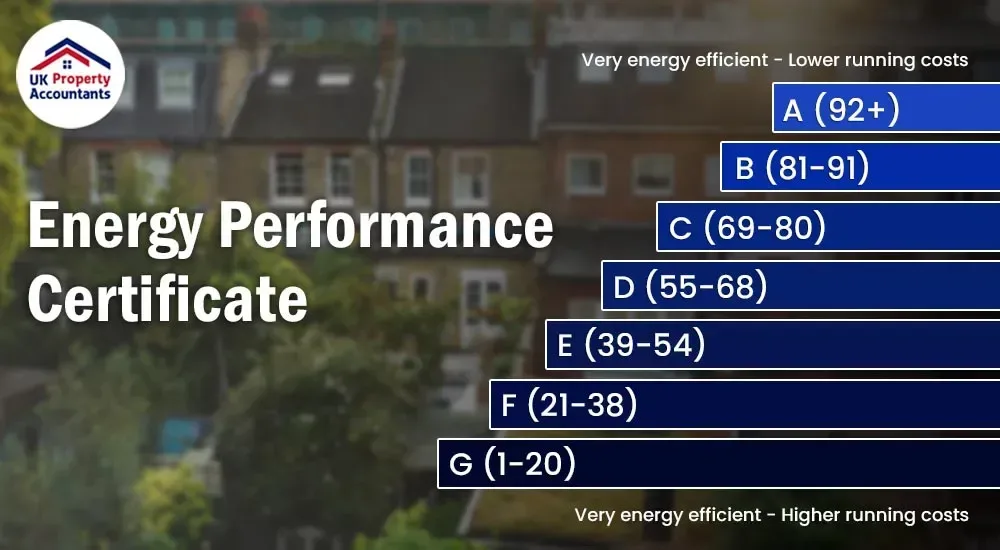
The EPC rating helps to determine how energy-efficient your property is. The properties are assessed on a scale of A to G, A being the most energy-efficient and G being the least energy-efficient. The EPC rating is mandatory when selling, renting or building a new property. It must be determined before you put your property or rental on the market for potential buyers and tenants.
The EPC rating must be assessed by an accredited assessor and is valid for 10 years. Currently, a minimum EPC rating of E is required to sell or rent out a property. However, according to independent research, 58% of tenants are demanding an EPC rating of C. Also, Edward Miliband, Secretary of State for Energy Security and Net Zero, in his speech to the House of Commons, said that the new government will demand an EPC rating of C by 2030. However, what he failed to mention is how this will be achieved.

What Could be the Potential Challenges to Meet the EPC Requirement?
Miliband claims that raising the standard of properties will support more than three million people in the country who are facing a fuel crisis. However, the National Residential Landlords Association (NRLA) warns that without a proper plan, landlords may struggle to meet the EPC targets. Maintaining a higher EPC rating is a win/win situation for both tenants and landlords. Tenants can have cheaper energy bills, while landlords can have marketable properties.
Hitting the EPC targets for new tenancies and properties may not be a problem. Where the problem really lies is that older tenancies may need tens of thousands of pounds for maintenance works. The NRLA is also concerned about whether the government will provide funding support for making the improvements. Under the previous government, spending on energy efficiency improvement was limited to £10,000. There has been no announcement of how the government plans to achieve this target and the funding support they will provide.
Conclusion
According to Ed Miliband, the new government will demand that landlords meet a minimum EPC rating of C by 2030. The EPC rating determines the amount of energy your property or rental consumes. Although raising the EPC targets can benefit both tenants and landlords in the future, landlords may struggle to meet the targets due to high maintenance costs. The NRLA also warns that without a proper plan, it will be a struggle for landlords to meet the EPC requirements.
About the author
UK Property Accountants is a specialist property tax and accounting firm serving clients across the UK and abroad. With over 10,000 properties under active accounting management, £8 billion in assets under accounting, clients spanning 57 countries, and an expert team of ACCAs and CTAs, we bring a depth of real-world property tax experience rarely found in any single firm. We hold a 99% client satisfaction rate and an Excellent rating on Trustpilot. All published content is reviewed by qualified professionals in line with current HMRC guidance.
Introducing RentalBux: Our MTD Software for Landlords
Generic software doesn’t understand property businesses and requires manual intervention to meet deadlines. That’s why we developed RentalBux!
- Built by Property Experts
- Designed for UK Landlords
- HMRC Recognised and MTD Compliant

Confused Where To Start?
Schedule a Free 15-minute discovery call by providing your contact details, mentioning your requirements, and selecting a convenient date for the call.
How our discovery call works:
- Complete Our Contact Form
- Discovery Calls Scheduled
- Receive a Tailored Proposal