


When a property owner dies, the tax position can feel complicated, but the basic rule is fairly simple. The property is normally valued at its market value on the date of death for Inheritance Tax purposes, and there is usually no Capital Gains Tax just because the owner has died.
Capital Gains Tax may only become relevant later if the property is sold for more than its value at the date of death. This guide explains the main tax implications of property transfers on death, including Inheritance Tax, CGT, rental income, jointly owned property and transfers to a spouse or civil partner.
Key Takeaways
Do You Pay Inheritance Tax or Capital Gains Tax on a Property After Death?
It is common to think that both Inheritance Tax and Capital Gains Tax apply as soon as someone dies. In most cases, that is not how it works.
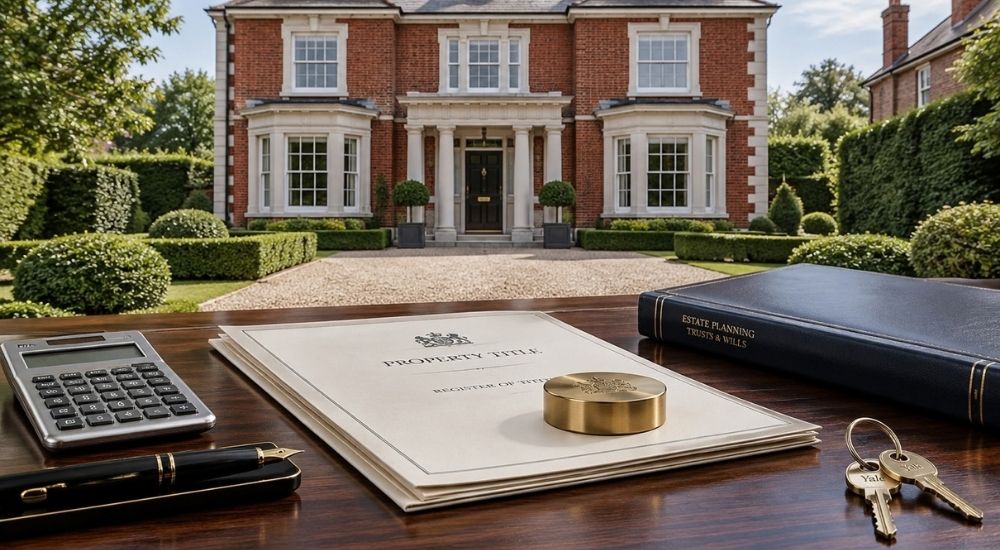
When a property owner dies, the property is usually valued as part of their estate for Inheritance Tax. There is normally no Capital Gains Tax at the point of death. Instead, the property's market value on that date becomes the new starting point for any future CGT calculation.
| Inheritance Tax | Capital Gains Tax | Income Tax | |
|---|---|---|---|
| What triggers it? | The owner's death and valuation of the estate | The property is sold or otherwise disposed of later | Rental income is received |
| Who deals with it? | Usually, the personal representatives | The estate if it sells the property, or the beneficiary if they sell later | The deceased before death, then the estate, then the beneficiary |
| What is taxed? | The property's value as part of the estate | The increase in value after death, after allowable costs and reliefs | The taxable rental profit |
| When is it dealt with? | Usually by the end of the sixth month after the month of death | A UK residential property sale may need to be reported within 60 days if Capital Gains Tax is due | Through the deceased's final tax affairs, the estate, or the beneficiary's own tax return |
Note
Inheritance Tax looks at the property's value when the owner dies, while Capital Gains Tax looks at any increase in value afterwards.
How Does Inheritance Tax Apply When a Property Is Transferred on Death?
When someone dies, their property is normally valued at its market value on the date of death and included in the estate for Inheritance Tax. A mortgage or other deductible secured debt can reduce the value taken into account.
The standard nil-rate band is £325,000, with extra allowances potentially available for a surviving spouse or civil partner and, in some cases, where a qualifying home passes to direct descendants. Anything left above the available allowances and reliefs is usually taxed at 40%.
Inheritance Tax is generally due by the end of the sixth month after the month of death, so payment may be needed before probate is granted. If most of the estate is tied up in property, the tax on land and buildings can often be paid in 10 yearly instalments, although interest may apply.
It is also important to use a realistic open-market valuation at the date of death and keep evidence to support it in case HMRC checks the figure.
Example
David dies owning a buy-to-let property worth £500,000, with a £100,000 deductible mortgage. He never lived in the property, has no other assets or relevant earlier gifts, and has the full £325,000 nil-rate band available.
After deducting the mortgage, his estate is worth £400,000. Deduct the £325,000 nil-rate band and £75,000 is left taxable. At 40%, the Inheritance Tax bill would be £30,000.
Because David never lived in the property, the residence nil-rate band does not apply. If the property is not sold straight away, the executors can generally spread the IHT attributable to it over 10 yearly instalments, although interest will usually apply.
What Happens to Rental Income Tax When a Landlord Dies?
When a landlord dies, the rental income does not simply disappear for tax purposes. Income up to the date of death forms part of the landlord’s final tax position, and the personal representatives may need to complete a final tax return. The normal Personal Allowance can still apply for that year, subject to the usual rules.
After death, any rent earned while the estate is being sorted out is usually taxed as estate income. Rental profit is generally taxed at 20%, with no Personal Allowance. If the estate’s total income is £500 or less in a tax year, there is usually no Income Tax to report or pay. Simpler estates can often settle the tax directly with HMRC, while larger estates may need to register and file a Trust and Estate Tax Return.
Is There Tax When Inherited Property Is Transferred to a Spouse?
In most cases, property inherited by a spouse or civil partner is free from Inheritance Tax, even if the property is worth a significant amount. However, special rules can apply if the deceased was a long-term UK resident, but the surviving spouse or civil partner was not, so it is important to check the position carefully.
If the property was owned as joint tenants, the deceased’s share will usually pass automatically to the surviving owner. It still forms part of the estate for Inheritance Tax, but the spouse exemption will normally cover it. Unmarried partners and siblings do not get the same exemption, although other allowances and reliefs may still help reduce the tax.
Not sure whether the property is owned as joint tenants or tenants in common? Read UK Property Accountants guide to Joint Tenants vs Tenants in Common to see how each type of ownership can affect inheritance, probate and what happens to the property after death.
How Do IHT and CGT Work Together on the Same Property Transfered on Death?
A property can be affected by both Inheritance Tax and Capital Gains Tax, but they apply at different times. Inheritance Tax looks at the value of the property when the owner dies. Capital Gains Tax may come later if the property rises in value before it is sold.
Example
| Estate sells in 2026/27 | Son inherits and sells in 2027/28 | |
|---|---|---|
| Estate value | £600,000 | £600,000 |
| Nil-rate band | (£325,000) | (£325,000) |
| IHT at 40% | £110,000 | £110,000 |
| Sale price | £530,000 | £545,000 |
| Market value at death | (£500,000) | (£500,000) |
| Selling costs | (£7,000) | (£7,000) |
| Capital gain | £23,000 | £38,000 |
| CGT allowance | (£3,000) | (£3,000) |
| CGT at 24% | £4,800 | £8,400 |
| Total IHT and CGT | £114,800 | £118,400 |
The important point is that the same value is not being taxed twice. IHT is based on the estate at the date of death, while CGT on inherited property looks at any increase in the property’s value after that date.
In this example, the longer the property is held and the more its value rises, the bigger the potential CGT bill. IHT for a death in March 2026 is generally due by 30 September 2026, while CGT on a later UK residential property sale usually needs to be reported and paid within 60 days of completion if tax is due.
If the property falls in value instead, Inheritance Tax loss-on-sale relief may be available in some cases.
Need help with Inheritance Tax or Capital Gains Tax on an inherited property?
UK Property Accountants can help you work out the tax, understand your reporting deadlines and deal with HMRC when the property is sold.
What Should Executors of a Rental Property Do in the First Six Months?
When a landlord dies, the rental property still needs looking after. Rent may still be coming in, bills may still need paying, and important tax deadlines can come around quickly. A simple checklist can make the first few months much easier to manage.
Getting these basics right early can save a lot of confusion later, especially when it comes to tax, rent and dealing with the property.
What Are the Latest Inheritance Tax Changes?
The main Inheritance Tax allowances are staying frozen. The £325,000 nil-rate band and £175,000 residence nil-rate band are set to remain in place until April 2031. That means if property and other asset values keep rising, more estates may gradually be pulled into the Inheritance Tax net.
There are also two important changes to be aware of. Since 6 April 2026, up to £2.5 million of qualifying agricultural and business property can still receive 100% relief, with 50% relief generally available above that level. Then, from 6 April 2027, most unused pension funds and pension death benefits will also be included in the estate for Inheritance Tax. For many families, that means property, business assets and pensions now need to be looked at together when thinking about estate planning.
Want to Stay Up to Date With the Latest Inheritance Tax Changes?
Conclusion
If you are dealing with a rental property after a landlord dies, get the valuation and tax position clear early. This can help avoid missed deadlines, unexpected tax bills and problems later when the property is sold or transferred.
If you need help with Inheritance Tax, Capital Gains Tax or estate reporting, UK Property Accountants can review the position and guide you through the next steps.
Frequently Asked Questions
If the property is being passed on through a will, the executors will usually need probate before they can transfer it into the beneficiary’s name. In England and Wales, this is normally done through HM Land Registry using the relevant transfer forms.
Beneficiaries can usually change how an estate is shared within two years of the death using a deed of variation. If the right conditions are met, HMRC can treat the change as if it had been made by the person who died for Inheritance Tax and Capital Gains Tax purposes.
There is no single option that works for everyone. In many cases, leaving a qualifying home to children or other direct descendants can help the estate benefit from the residence nil-rate band, provided the conditions are met.
Usually, yes. If the property was owned solely by the person who died, the executors will normally need probate or letters of administration before they can transfer it. Different rules can apply if the property was jointly owned.
Yes. Executors can usually transfer the property directly to the beneficiary rather than sell it first. In England and Wales, this is known as an assent.

- Autumn Budget 2026: Healey Announces Major Devolution of Tax Revenues to Local Leaders - 28 October 2026
- Autumn Budget 2026: UK Borrowing Set to Fall to 1.8% - 28 October 2026
- Autumn Budget 2026: Key Changes to Wages, Pensions, Business Rates and ISAs - 28 October 2026
