


Buying or owning a high-value residential property in the UK is exciting but often comes with a heavier tax bill than expected. From the moment you purchase to the day you sell; a series of taxes quietly wait in the wings.
And it's not just one tax, stamp duty, ATED, capital gains or Inheritance Tax. Each one has its thresholds, traps and planning opportunities. It is a lot to take in, especially when the tax figures climb quickly with property value.
We've broken everything into clear, manageable sections, so whether you're a homeowner, investor, or planning to buy through a company, you'll know exactly what to expect and how to plan smartly.
Let's unscramble high-valuation residential property tax, one step at a time.
Valuation Considerations
Regarding high-value property tax, the value of your home or how much HMRC thinks it is worth can be the deciding factor in your entire tax case. That's why valuation is not a nicety; it's a necessity.
Some taxes, like ATED and SDLT, have specific value thresholds where the property value directly triggers extra rules. Others, like Capital Gains Tax (CGT) and Inheritance Tax (IHT), treat property value naturally, meaning higher values just lead to bigger tax bills, but without a "high-value property" label.
Here's how it plays out!
ATED applies if a residential property is worth more than £500,000 and is held by a company, partnership with a corporate member, or similar entity.
Higher SDLT bands apply as property prices rise (e.g., 10% above £925,000, 12% above £1.5m). Additional surcharges for second homes (+5%) and non-residents (+2%).
For Capital Gains Tax (CGT), there is no special "high value" CGT rule. Bigger gains equate to bigger taxes, so naturally, high-value properties face much heavier CGT bills. Higher-rate taxpayers pay 24% on residential property gains.
Also, there is no high-value label for Inheritance Tax (IHT), but property value pushes the estate's total value up. And importantly, for estates over £2 million, the residence nil-rate band gets tapered (reduced).
The Role of the Valuation Office Agency (VOA)
The VOA has one specific role: working out property values for tax purposes. With high-value residential property, their assessments are especially relevant to:
- Annual Tax on Enveloped Dwellings (ATED)
- Helping HMRC with tax investigations or disagreements
While they also band Council Tax, this is usually less relevant to the upper end of the market since even multi-million-pound homes are capped in the most costly bands.
How Properties Are Valued
VOA valuations are based on the open market value, which is what the property would sell for on a given date. For ATED, the relevant valuation date for the current chargeable period is 1 April 2022, and this valuation will typically run for five years.
Key valuation considerations are:
Any substantial change in the property or pattern of ownership may necessitate a new valuation before the following fixed date.
Challenging a Valuation
If you feel a VOA valuation is far off the mark, you can challenge it. The process differs based on the tax involved:
ATED
You can submit a professional valuation and make your case to HMRC. If they disagree, it may be sent to the VOA for consideration.
Council Tax
If you believe your home has been unreasonably valued, you may complain to the VOA in person, but savings are usually negligible for expensive properties.
A Royal Institution of Chartered Surveyors (RICS) trained surveyor can provide a formal valuation in your favour, especially when dealing with ATED or potential inquiries.
In the high-value property sector, tiny variations in valuation can have massive tax consequences. Acquiring the right figures and understanding when to hold back can have a real-world financial effect.
Key Taxes Applicable to High-Value Properties
Stamp Duty Land Tax (SDLT)
Stamp Duty Land Tax (SDLT) is a tax you pay when buying property in England or Northern Ireland.
How SDLT Works
The amount of SDLT you pay depends on a few key things:
- Whether you are buying as an individual or through a company.
- If the property is your main home or an additional property.
- Whether you are UK-resident or non-resident.
For most homebuyers purchasing their main residence, SDLT is charged on a sliding scale. You only pay the higher rates on the price portion within each band.
SDLT Rates for Residential Property
Here is a quick breakdown of the current SDLT rates:
Property Price | Standard SDLT Rate |
|---|---|
Up to £125000 | 0% |
£125001 to £250,000 | 2% |
£250001 to £925000 | 5% |
£925001 to £1.5 million | 10% |
Over £1.5 million | 12% |
Note
These thresholds reverted to their pre-recession levels on 1 April 2025, increasing the tax burden for many buyers.
What If It is a Second Home?
In October 2024, the government increased the surcharge on second homes/additional property from 3% to 5%, tightening the screws on buy-to-let and holiday home buyers.

The surcharge applies to properties worth more than £40,000 and includes holiday homes and investment properties.
Higher rates for additional properties are 5% in addition to the normal rate:
Property Price | If It Is an Additional Property |
|---|---|
Up to £125000 | 5% |
£125001 to £250,000 | 7% |
£250001 to £925000 | 10% |
£925001 to £1.5 million | 15% |
Over £1.5 million | 17% |
Example
Buying a £1 million residential property as your main home would currently trigger a Stamp Duty Land Tax (SDLT) bill of £43,750. But if the same property is a second home, you would look at £93,750 due to the 5% surcharge.
Non-Resident Surcharge
Since April 2021, non-UK residents have faced an extra 2% surcharge on top of the usual SDLT rates when buying residential property in England or Northern Ireland. So, if you're buying from abroad or have recently moved to the UK, this may apply even if it's your only property.
Buying Through a Company
Companies purchasing residential property for over £500,000 now face a flat 17% SDLT rate, up from 15%. This is especially relevant for companies, partnerships with corporate members, and certain investment schemes. The rate increase is a clear signal: using corporate wrappers to buy luxury homes became more expensive. However, reliefs are available in some cases, such as for property rental businesses or property developers.
What About Buying Shares in a Property-Holding Company?
Rather than buying the property, some buyers purchase shares in a company that owns the property. In this case, SDLT doesn't apply. Instead, you pay stamp duty at 0.5% on the share price, which can lead to significant tax savings.
Filing and Payment
Once you've completed a UK property purchase, the clock starts ticking. Stamp Duty Land Tax (SDLT) must be paid and notified to HMRC within 14 days of the transaction's effective date (usually the completion date).
This is done by submitting an SDLT return, even if no tax is payable, say, if the property is under the limit or there's relief. If you do it incorrectly, you could be charged penalties, interest, and any tax due.
If you're buying through a corporate structure, the responsibility to file and pay still applies, and the SDLT rules can get even more complex when it comes to linked transactions, multiple dwellings, or non-resident surcharges.
Annual Tax on Enveloped Dwellings (ATED)
ATED is a yearly tax on high-value UK residential properties owned by non-natural persons, typically companies, partnerships with corporate members, or investment schemes. If your company owns a UK home worth over £500,000, you may need to submit an ATED return and pay the relevant charge even if no tax bill arises. Even overseas companies must comply.
Quick Question:
What if the property is mixed-used?
For those with both residential and non-residential use, ATED only applies to the residential portion.


How Much is the ATED Charge?
The amount of ATED you pay depends on what your property is worth. Properties are usually revalued every five years, with the most recent revaluation date being 1 April 2022. If you bought the property after that date, the value is based on what you paid. The charge also goes up a little each year to keep pace with inflation.
Current ATED Band (1 April 2025 to 31 March 2026):
Property Value | Annual Charge |
|---|---|
£500,001 to £1 million | £4,450 |
£1,000,001 to £2 million | £9,150 |
£2,000,001 to £5 million | £31,050 |
£5,000,001 to £10 million | £72,700 |
£10,000,001 to £20 million | £145,950 |
Over £20 million | £292,350 |
Note
The charge is pro-rated if the property is only held for part of the year.
Filing & Payment
You must submit an ATED return every year for each property that qualifies. The payment is due by 30 April or within 30 days of buying the property if you purchase it partway through the year. ATED follows a fixed year from 1 April to 31 March, and returns are filed through HMRC's self-assessment system.
Key ATED Dates for the Tax year 2025-26
Chargeable Period
1 April 2025 → 31 March 2026
Filing & Payment Deadline
30 April 2026
Did you buy the property during the year? You'll need to file and pay within 30 days of completion.
Valuation Date
Use the market value as of 1 April 2022 or the purchase price if you bought it after that date.
Multiple Dwelling Implications: What Counts and What Doesn't?
Regarding the ATED, it becomes a bit trickier if your property portfolio involves more than one dwelling under the same title or building. Typically, ATED will apply to UK residential property worth more than £500,000 owned by companies or equivalent organisations. But what if you've bought a block of flats or a house converted into multiple self-contained units? Do you pay ATED for each one or the entire property?
Here's where it gets interesting. If the individual units qualify as separate dwellings, they may each be assessed separately for ATED. Depending on each unit's value, this will slice or even abolish your ATED liability; however, it will only be if the units are separate with their entrances, kitchens, and amenities, not just rooms with a lock on the door.

Note
A block of six £300,000 flats held in a company structure might avoid ATED entirely. But one £1.8 million townhouse with shared facilities? That's likely to trigger a full ATED charge.
If you're unsure whether your setup counts as one dwelling or many, it's not something to guess. The difference can mean tens of thousands in annual tax.
What About Reliefs under ATED?
Many companies don't pay ATED because they qualify for one of the available reliefs. Relief doesn't apply automatically; you must submit a return to claim it.
Letting the Property on a Commercial Basis
If your company rents out the property to unconnected third parties on commercial terms, like in a standard buy-to-let arrangement, you can usually claim relief. This applies to long-term and short-term rentals (like holiday lets) as long as it's a genuine business setup.
Property Development or Redevelopment
Relief is available if your company is developing or redeveloping residential property to sell. The point is that the property must be held as trading stock, not as a long-term investment.
Property Dealers
Like developers, property dealers can claim relief if the property is acquired for resale and not for personal use or investment.
Charities Using the Property for Charitable Purposes
If the property is owned by a registered charity and used for charitable purposes, ATED relief usually applies. This might include using the property for education, healthcare, or social support services.
Employee Accommodation
Some companies provide accommodation to employees or partners as part of their job. If the property is being used to house an employee (and not a director or someone connected to one), and they live there to carry out their work, you may qualify for relief.
Properties Open to the Public
For example, a historical building or cultural experience might be eligible for relief if the property is regularly open to the public. To qualify, it must typically be accessible for at least 28 days a year.
Farmhouses
Relief may apply when a farmhouse is occupied by a farm worker or a former long-serving employee, provided the property is essential to running the agricultural business.
Financial Institutions in Possession
Banks, lenders, or institutions that have taken possession of a residential property as part of their lending business may also qualify for relief—particularly in repossession scenarios.
Public Bodies
Properties owned by public sector organisations may be exempt from the charge altogether.
The ATED return filing deadline, i.e., 30 April 2025, is a few days away. Missing the return may trigger automatic penalties even if one owes no tax. At UK Property Accountants, we'll handle the paperwork, reliefs, and filing so you can relax and not have to think about a thing.
Submit your ATED return with us before the deadline passes.
Capital Gains Tax (CGT)
Whether you're a UK resident or non-resident, CGT is due on the disposal of high-value UK residential property. The rules, however, vary depending on your tax residence status, the property's value, and how long it's been held. Let's delve deeper into the new rates and how to calculate what you owe.
Who's Liable for CGT on Residential Property?
UK Residents
CGT applies if you sell a second home or investment property. It's charged on the gain, the difference between the original and selling prices, and less allowable expenses (such as legal fees, improvements, etc).
Non-UK Residents
Non-UK residents have also been liable for CGT on UK residential property since 6 April 2015, with the option to take the MV on 6 April 2015 or the original purchase price. If the purchase value were higher than 6 April 2015, the charge applying to any gain would be accrued after the purchase date. The most significant alteration for non-residents was in 2019, when the tax was widened to encompass commercial property and indirect disposals of property-rich entities.
What Rates Apply?
The tax rate depends on who you are and the amount of gain or income you have. It's as follows: For UK Resident Individuals: 18% on gains that fit into your basic income tax band, 24% on gains above the basic band.
Note
The previous higher rate was 28%, but from 6 April 2024, it has been reduced to 24%.
For Companies
Gains on high-value residential property are liable to Corporation Tax, normally 25%, but possibly lower for small companies under marginal relief provisions.
For Non-Residents
Non-resident individuals and companies are now liable for CGT on the sale of UK residential property or property-rich companies. The same rates apply to non-UK resident individuals, 18% or 24%, depending on your income and gains that are relevant.
How are Gains Calculated?
CGT is due on your gain on the sale of the property. To calculate the gain on selling a property, you subtract the price you paid, any allowable costs, and any reliefs from the price you sell it for. For UK residents, the base cost is usually what you pay for the property. Allowable costs cover items like Stamp Duty Land Tax (SDLT), solicitors' fees, and improvements you've made to the property. However, day-to-day maintenance costs, like painting or minor repairs, do not qualify.
If the property's market value on 6 April 2015 was lower than the original purchase price plus any cost of capital improvements, a non-UK resident may choose to calculate the gain on the original purchase price. In this case, the entire gain throughout ownership would be taxed, but it might result in a lower tax bill if the property has not risen in value a great deal since the purchase.
Alternatively, the time apportionment method can be used, where the total benefit for the entire period of ownership is calculated, and only the amount that runs after 6 April 2015 will be subject to UK Capital Gains Tax.
Reporting and Paying CGT
The rules for reporting and paying Capital Gains Tax (CGT) have been tightened.
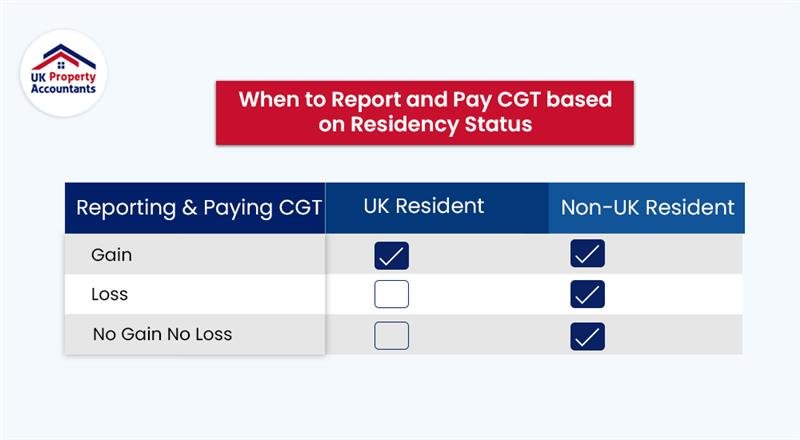
UK residents now have to report and pay CGT within 60 days of the completion of the sale of a residential property from 6 April 2020. This puts them in line with non-residents and makes the process quicker.
For non-residents, the same 60-day time frame applies to report the disposal of UK residential property, including the sale of shares in companies or interests in partnerships that own property in the UK. Non-residents must report the disposal within this 60-day time frame, even if there are no gains.
Non-UK residents are chargeable to Capital Gains Tax on disposal of interests in UK property-rich companies or partnerships where two important conditions are met:
- The asset disposed of has at least 75% of its gross asset value stemming from UK land, and so is a UK property-rich asset, and
- The non-resident holds a substantial indirect interest in the company—generally 25% or more of the equity interest at some time during the two years up to disposal.
In such cases, even though it is not the property itself, which is being sold, the gain on disposal of shares or partnership interest is chargeable to UK Capital Gains Tax.
What Reliefs Are Available under CGT?
Some circumstances can relieve or mitigate CGT, and you will pay less:
Principal Private Residence Relief (PPR)
If the house was your home for part or all of the period you were an owner-occupier, you may get PPR relief. It could reduce or even eliminate you from your CGT bill, depending on the situation.
Letting Relief
If you've rented out the property that was once your main residence, you may be able to claim letting relief, reducing your taxable gain even more.
Investments and Developers
There are reliefs for companies with property for trading purposes (like property developers) and reliefs for rent businesses.
Charitable Use
Other reliefs exist if the property is used for charity.
But such reliefs are not automatic. You must claim part of your CGT reporting.
Inheritance Tax
Inheritance Tax (IHT) can be a significant consideration for high-value residential property. IHT is a tax on the value of a person's estate when they pass away, including property, cash, and possessions. The rules can seem complex for high-value residential property but understanding how IHT works can help you plan.
Who's Liable for IHT?
UK Residents
UK Inheritance Tax is charged on the whole estate of an individual, including property, cash, and other assets. For UK residents, IHT is due on the worldwide estate. After death, the estate's value is assessed after deducting debts, exemptions, and reliefs. If it exceeds £325,000 (the "nil-rate band"), IHT is normally payable at 40% of the amount above.
But some homeowners can leave up to £500,000 tax-free. This is the basic nil-rate band of £325,000 plus the residence nil-rate band, presently £175,000, which is given when a main residence is left to direct descendants. Additional exemptions—such as property left to a spouse or civil partner—can reduce or even wipe out the tax bill.
Planning earlier is especially important for the owners of valuable property estates.
Non-UK Residents
IHT is paid for overseas residents on UK residential property held outright by a corporate vehicle. This includes property owned by non-residents or where there is an alternative company owning UK land. Non-residents are subject to IHT on the worth of their UK estate of property, irrespective of their UK tax standing.
How is IHT Calculated?
Inheritance Tax is calculated on the total value of a person's estate, including a high-value residential home, when they pass away, including property, money, and personal possessions. The house's value is estimated in terms of its open market value. Any existing mortgage or other liability relating to the property is deducted from the estate's value before tax is charged. Everyone is also due a tax-free allowance, the nil-rate band, below which there is no Inheritance Tax.
If the home of the deceased is being passed on to children or grandchildren, an additional allowance, the residence nil-rate band may apply, further reducing the taxable value of the estate. After deducting all the debts, exemptions and reliefs, the residue that remains above the combined threshold is subject to the usual Inheritance Tax.
What Exemptions and Reliefs Are Available?
Although IHT can be an expensive burden, there are reliefs and exemptions which can limit the tax payable:
Residence Nil-Rate Band
You will qualify for this relief if you move out of your main residence (your usual home, the property) and leave it to close relatives (children or grandchildren). However, if the estate is worth more than £2 million, the Residence Nil-Rate Band is gradually reduced by £1 for every £2 over the threshold. This means that for individuals with estates above £2.35 million, the RNRB is lost entirely.
Spouse or Civil Partner Relief
If you leave the property to a spouse or civil partner, no IHT needs to be paid, regardless of the estate's value. However, this relief does not extend to assets passing to other relatives or third parties.
Charitable Relief
If the assets are bequeathed to charity, your estate is IHT-free. Additionally, if 10% or more of the net estate has been bequeathed to charity, the IHT on the remainder of the estate can be reduced to 36%.
Business Relief
There can be some relief if the property is used in your business (for example, a buy-to-let business). It might reduce the value of the property for IHT purposes.
Potential Tax Planning Strategies
Taxes can bite hard when valuable property is involved, but clever planning can soften the blow. By structure and timing alone, you might be able to reduce your liability without breaking any rules. The trick is to work with the system, not against it.
Do You Own It Personally or through a Company?
One of the biggest decisions you'll face is how to hold the property in your name or through a limited company. Each route has tax consequences; the "right" choice depends on your goals.
Maintaining the property in your name is easy and simple. But that simplicity can cost money. As a higher-rate taxpayer, Capital Gains Tax (CGT) on residential property can be as much as 24%. And for inheritance, anything above the nil-rate bands could be payable at a 40% rate under Inheritance Tax (IHT). Add Stamp Duty Land Tax (SDLT) surcharges on second homes or for non-residents, and the personal route can quickly become expensive.
On the other hand, corporate ownership is accompanied by a new regime. Companies are taxed on profits at 19% or 25%, depending on the profit level, which is typically lower than individual CGT. Profits can be retained in the company and reinvested, offering long-term planning opportunities. Ownership by shares can also allow for some IHT planning tactics, particularly for families. And mortgage interest, which is restricted for individual landlords, remains fully deductible for companies.
However, extracting profits from the business attracts a second layer of taxation. After the company pays Corporation Tax on profits, dividends distributed to shareholders are taxed personally. Dividend Tax is currently up to 39.35%, depending on the shareholder's income band. Double taxation means that the company structure is efficient for reinvestment and planning but needs care when extracting funds personally.
Also, there are other trade-offs. If the property is worth over £500,000 and isn't rented out or used in a trade, the company may face Annual Tax on Enveloped Dwellings (ATED). That annual charge starts at over £4,000 and rises steeply for more expensive properties. If a company buys a residential property worth over £500,000 and doesn't qualify for relief, SDLT could jump to a flat 17%.
In short, personal ownership suits simplicity and long-term occupation. Company structure can offer efficiency and flexibility but require more careful handling. Every situation requires proper analysis, and consulting with tax experts is highly recommended.
Don't Forget Reliefs: They Could Save You Thousands
The UK tax system may be complex, but it offers a few lifelines in reliefs and exemptions; you just need to know where to look. And importantly, these reliefs don't apply automatically. If you don't claim them, you don't get them.
One of the most well-known is Private Residence Relief. If you've lived in the property as your main home, part (or all) of the gain may be exempt from CGT when you sell.
Business Property Relief (BPR) is another powerful tool for IHT planning. If your property is part of a genuine business, specifically a trading business, its value might be completely excluded from your estate for IHT purposes.
And let's not forget ATED reliefs. If your company rents the property out commercially, uses it in a property development trade, or even if it's a farmhouse used in a working business, you may not need to pay the annual ATED charge at all.
Every relief has its conditions and can be strict, but they're worth exploring with professional advice.
Timing Isn't Everything, But It Helps
Sometimes, it's not just what you do it's when you do it. Selling a property before or after 5 April (the UK's tax year end) can affect how much CGT you pay, particularly if you're trying to use up annual allowances or avoid changes to tax rates.
Inheritance Tax planning works best when it is ahead of time; giving away assets or placing them in trust some years in advance will probably pay dividends in reducing the ultimate cost, but it must be well in advance.
Timing is also critical in SDLT. Property prices near important breakpoints, e.g., £925,000 or £1.5 million, can be assisted by savvy contract structuring to keep the SDLT rate as low as possible.
For companies, timing a purchase or sale of a property to fit in with a specific accounting period will affect when and how Corporation Tax is paid, especially if the company's profits vary.
Even minor timing decisions like delaying a refurbishment until after a valuation or rushing a sale before a budget announcement can have a tangible impact.
Tax decisions are rarely a matter of black and white at the higher end of the market. But with the right advice, you can make the system respond to your needs. Here at UK Property Accountants, we help property investors make smart, informed decisions right from the initial consideration of a buy. When the numbers are this high, the specifics matter.
Conclusion
Having valuable property in the UK is an open door, but it's also an open door to a world of tax rules, moving thresholds, and sneaky surprises. From SDLT's insidious creeping surcharges to ATED's annual nip and the spectres of CGT and IHT looming large, the numbers can quickly mount up if you're unprepared.
While no wholesale reforms have come our way recently, the tax landscape remains lively and complex. Investors must watch out for shifting market forces, political talk about property tax, and potential overhauls such as SDLT or Capital Gains Tax reforms.
This guide has broken down the key players, value triggers, and smart tactics to keep you ahead of the game. But when it comes to real-world decisions, particularly those regarding seven-figure properties, understanding the fundamentals is merely the beginning.
That's where UK Property Accountants step in. We're not number-crunching machines; we're property tax experts who breathe and live in the UK real estate scene. Whether you're setting up a new buy, thinking of an exit, or optimising your existing setup, we assist you in making the smart moves, not the expensive ones.
In this game, it's not just about what you own. It's how you own it.
Need expert advice on property taxation for high-valued properties in the UK?
Contact us today for efficient and
hassle-free assistance.

- How to Submit Your MTD Final Declaration to HMRC - 8 September 2026
- Heat Network Metering & Billing Regulations 2026 Changes Explained - 26 August 2026
- Heat Network Registration: What Ofgem Requires - 25 August 2026
