

UTR Number in UK: A Guide for Taxpayers
Learn how to get your Unique Tax Reference (UTR) Number hassle-free. Essential for self-assessment and corporation tax. Get yours now!

Whether you're currently operating as a sole trader, involved in a partnership, or contemplating the launch of a sole trader business, obtaining a Unique Tax Reference (UTR) number is paramount. This guide not only provides a fundamental understanding of the UTR but also offers a step-by-step tutorial on the application process.
Explore the essentials and ensure you're equipped with the necessary information for a seamless UTR application.
Understanding UTR
A Unique Tax Reference (UTR) Number is a 10-digit number that HMRC uses to identify the taxpayers or their businesses for tax purposes. A UTR which is distinct from each individual and company, is essential for the following reasons:
- Filing your Self-Assessment Tax Returns
- Paying and filing Corporation Taxes
Who Needs a UTR
All individuals and companies who file self-assessment tax returns need to possess a UTR. This includes self-employed individuals, limited companies, partners, and company directors, making the UTR a universal requirement.
Obtaining your UTR
To obtain a UTR, you need to register with HMRC via HMRC’s website.
If the only source of your income is via employment, you do not need to register for UTR. However, for self-employed individuals, the process involves notifying HMRC of your self-employment and registering for Self Assessment. Class 2 National Insurance is no longer compulsory for most self-employed people: for 2026/27 it is treated as paid once profits exceed the £7,105 small profits threshold, and you can choose to pay voluntary Class 2 contributions of £3.65 a week if your profits are lower. Class 4 National Insurance Contributions are payable at 6% on profits between £12,570 and £50,270 and 2% on profits above £50,270.
UTR for Self-Employed Individuals
A sole trader or self-employed must be registered within HMRC for self-assessment if earning per tax year is above £1,000.

To register, follow the following steps:
Creating Account: You must create an account on the HMRC website, confirm your email address, create a password, and set up account recovery details.
Verifying Information: HMRC asks for certain information that must be provided and be confirmed with the relevant documents, such as your UK passport.
After account creation, a letter containing the UTR number will be sent via post within 10 days, which is needed to file the tax return. The deadline to finish registration once started is 90 days, and a Government Gateway account is required.
Entering Business Details: The next step is selecting the type of business and answering questions about the business, requiring information such as start date of self-employment, and contact details.
Once that part of the process is completed, you will be shown a preview of the information you entered. You need to carefully look into these and confirm the accuracy of the details.
Submitting Application: When you are confident of the information, submit the application and wait for verification by HMRC, which can take up to a week.
UTR for Limited Companies
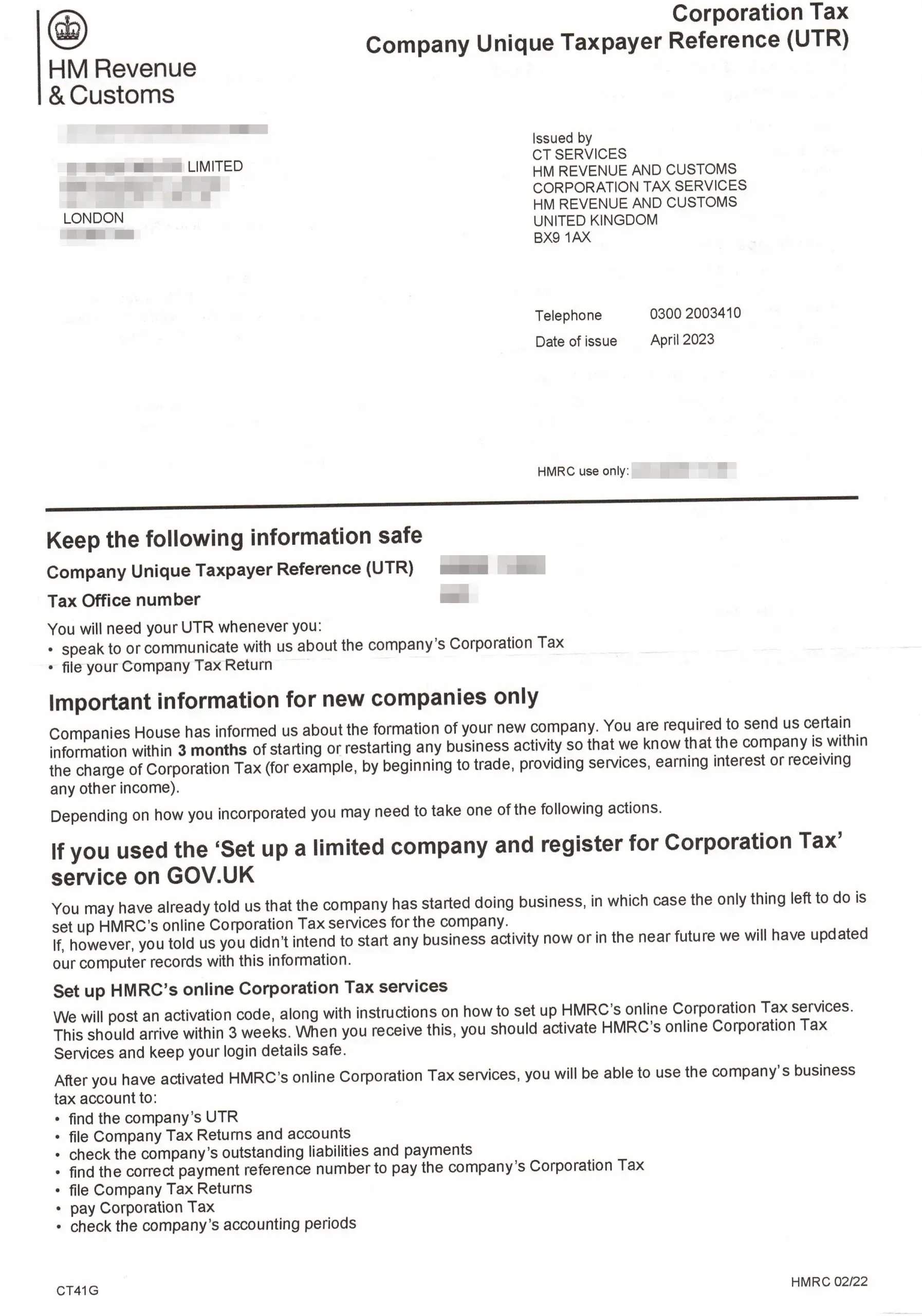
Limited companies also have a distinct UTR number, which is generally referred to as the Corporation Tax UTR number.
Once you register a limited company in the Companies House, a corporation tax UTR number will be automatically provided to your limited company. HMRC usually posts your company’s UTR number within 14 days of the company being registered with Companies House.
However, you can request your company’s UTR online if you did not get your UTR after registration.
Given below is the sample of the UTR number letter issued by the HMRC to a limited company.
UTR and Personal Tax
A UTR number is a prerequisite for filing your self-assessment returns, which must be done online by 31 January following the end of the tax year to which the information relates. For example, the tax return for 2025/26 (6 April 2025 to 5 April 2026) should be filed by 31 January 2027.
If you have not filed self-assessment returns before, you must tell HMRC that you need to register by 5 October following the end of the tax year in which you started self-employment or had other taxable income. For the 2025/26 tax year, that deadline was 5 October 2026, so if you have not yet registered you should do so as soon as possible.
Telling HMRC after the 5 October deadline could result in a penalty, and there is also a risk of not receiving your UTR in time to file your self-assessment by the deadline, in which case late-filing penalties may apply.
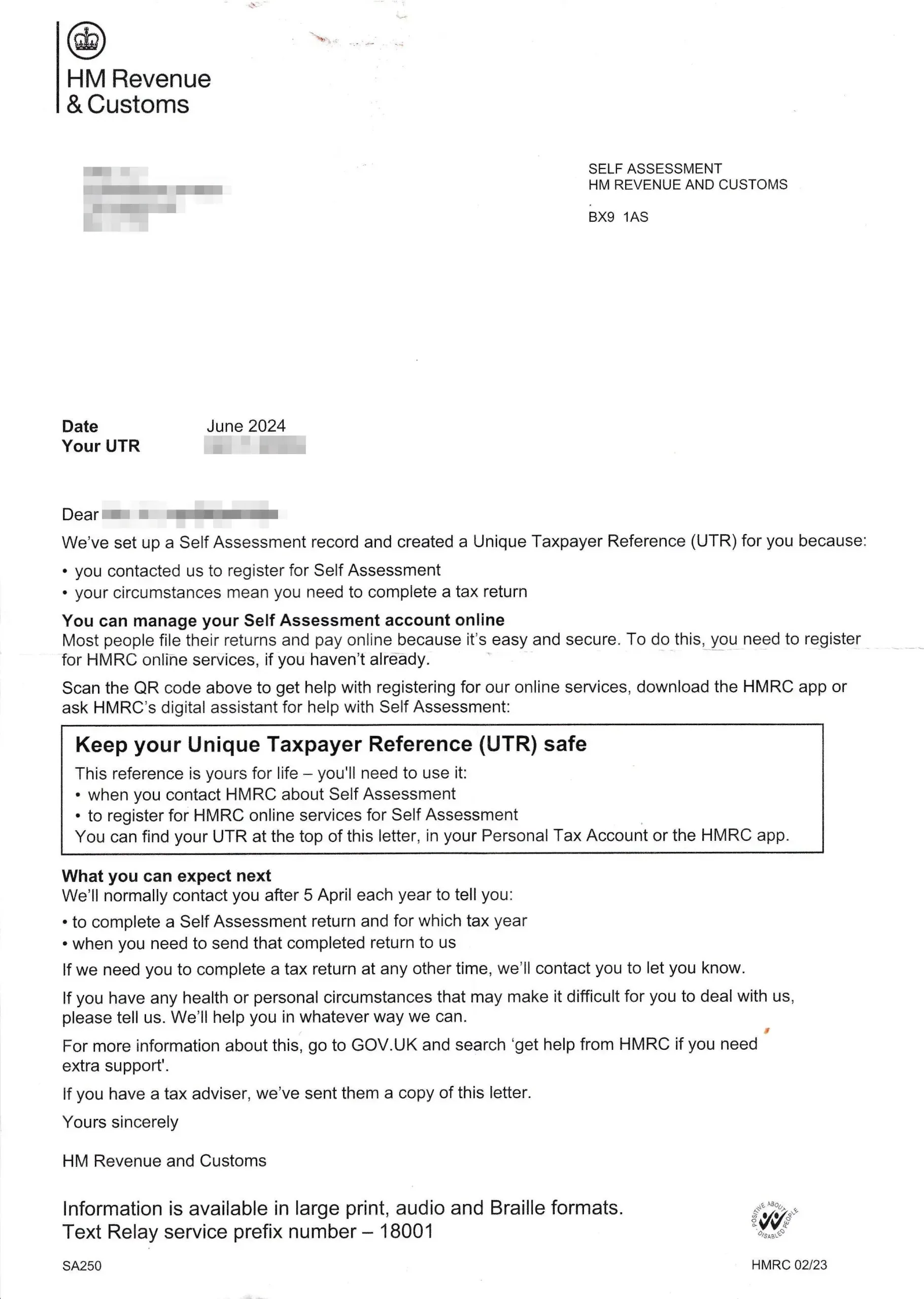
Given below is the sample of the UTR number issued by HMRC to an individual.
Have you Lost or Forgotten Your UTR?
If you have lost or forgotten your UTR, you should initially look into the following:
- Your personal tax account or the HMRC app,
- Your earlier self-assessment returns or
- Previous letters from HMRC.
If you still cannot find UTR, you should contact HMRC to request for a copy of your UTR number. Generally, you’ll be asked about the personal details on your lost UTR.

Limited companies can request their corporation tax UTR with the HMRC online. The UTR number will be sent to the business address registered with the Companies House. Before sending you a copy of your Corporation Tax UTR, HMRC will ask for your:
- Company Registration Number, and
- Registered Company Name
It is important to note that the copy of corporation tax UTR cannot be requested for companies that have been officially dissolved and no longer on the Companies House Register.
Changing your UTR
UTR number cannot be changed once it has been issued. However, if you deregister and then register again with few changes, the number will be the same. The history associated with the UTR number cannot be avoided.
However, you can contact HMRC to update your details or those of your business.
Conclusion
In conclusion, the Unique Taxpayer Reference (UTR) is the keystone for effective tax management in the UK. Whether as a self-employed individual or operating a limited company, it’s crucial to understand the significance your UTR holds. Contacting HMRC without any undue delay should be your priority if you cannot locate your UTR.
Frequently Asked Questions
About the author
Susan Basnet, a dedicated ACCA Affiliate, excels in accounting standards, auditing and taxation. He aims to bridge the gap between theoretical knowledge and practical applications, providing companies with support to achieve optimal results in areas where they need it.
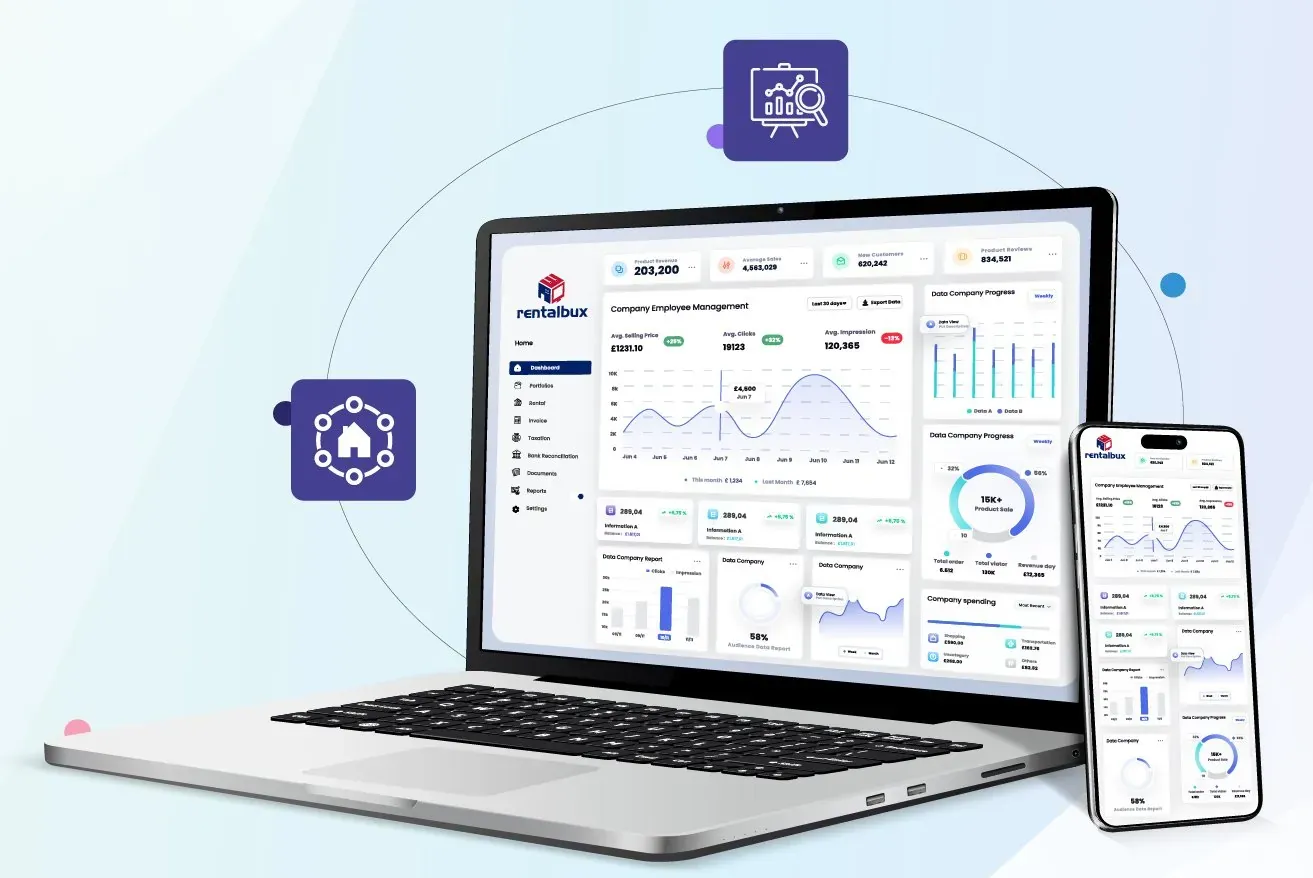
Introducing RentalBux: Our MTD Software for Landlords
Generic software doesn’t understand property businesses and requires manual intervention to meet deadlines. That’s why we developed RentalBux!
- Built by Property Experts
- Designed for UK Landlords
- HMRC Recognised and MTD Compliant
Confused Where To Start?
Schedule a Free 15-minute discovery call by providing your contact details, mentioning your requirements, and selecting a convenient date for the call.
How our discovery call works:
- Complete Our Contact Form
- Discovery Calls Scheduled
- Receive a Tailored Proposal